
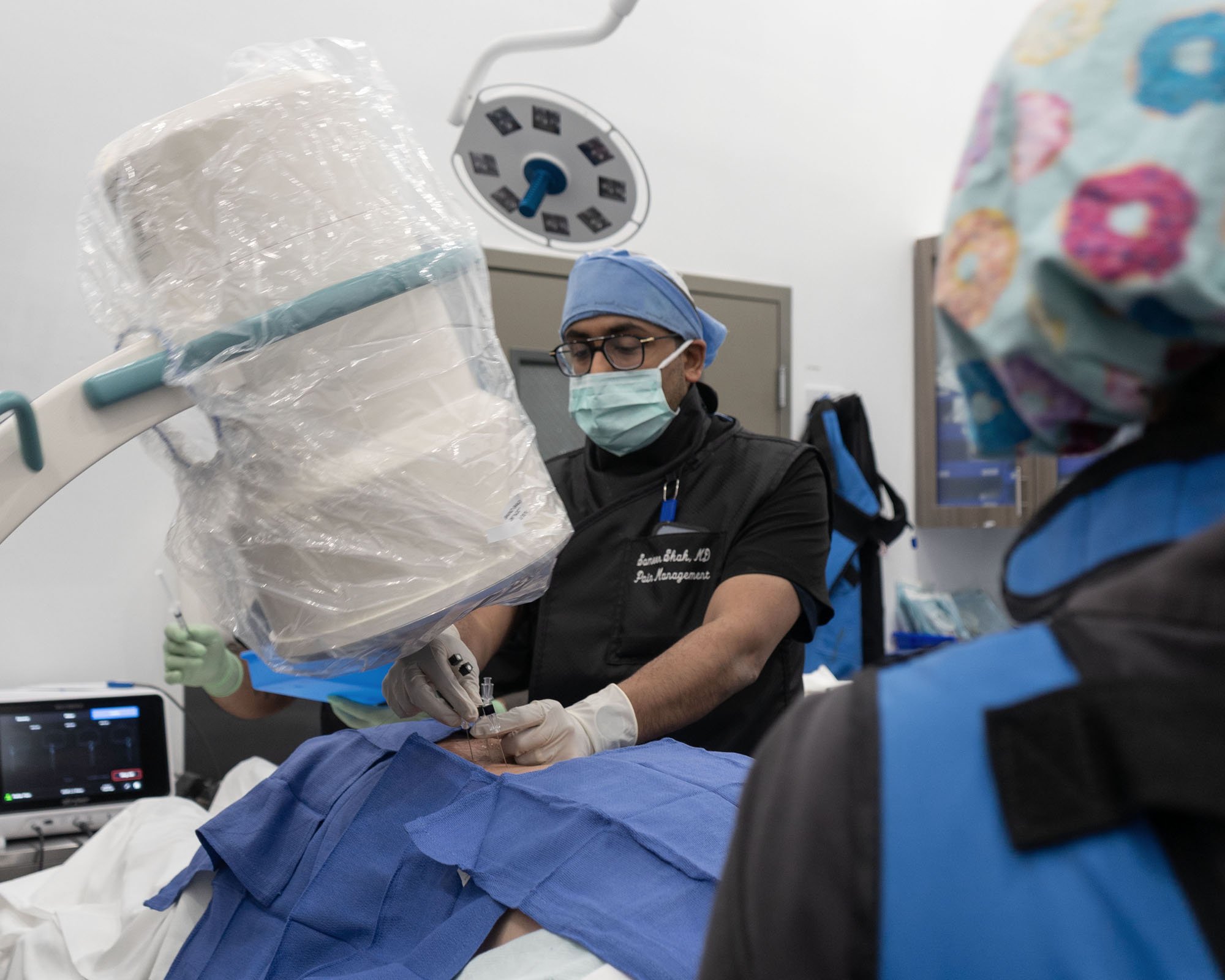
Minimally invasive procedures, responsible medication management, and physical therapy for effective pain control.
Interventional procedures decrease pain by targeting the source directly so that you can improve your physical function and gain the benefits of physical therapy, minimizing your use and dependance on oral medications for pain control.
Our procedures are done in a sterile environment with high resolution x-ray or ultrasound guidance to ensure safe and accurate placement.
Our physicians are dual board certified in Anesthesiology and Pain Management
Patients have the option to receive anesthesia/sedation for treatments for comfort and ease
Each physician has spent 1 additional year after residency in training in advanced interventional procedures at nationally ranked hospitals across the United States so that you can be confident in your treatment.
Together, our physicians have over 3 decades of combined experience treating patients suffering with pain.
Conditions we treat
-
Cervical pain refers to discomfort or pain in your the upper part of your spine, located in your neck. The cervical spine is made up of seven different vertebrae that support the weight of your head, allowing for a wide range of head movements. It also houses and protects your spinal cord and nerve roots, making it a crucial part of your body.
Cervical pain can be caused by a range of factors, including muscle strains, injury, degenerative diseases, nerve compressions, and more.
-
Thoracic pain refers to discomfort or pain in your the middle part of your spine, connecting to your rib cage. The thoracic spine is made up of twelve different vertebrae that provide stability and protection for your vital organs.
Thoracic pain can stem from a range of factors including, but not limited to, muscle strains, joint disfunction, disc problems, injuries, posture, and more.
-
Lumbar pain refers to discomfort or pain in your the lower part of your spine. The lumbar spine is made up of five different vertebrae. This area bears a significant portion of your body weight, which is crucial for flexibility and movement. Additionally, it is where your nerves brand out to supply the legs and feet.
Lumbar pain can be caused by muscle strains, disc problems, arthritis, spinal stenosis, injury, and more.
-
Spinal Stenosis is caused by an abnormal narrowing of the spinal canal that results in pressure on the nerve roots which can result in numbness, pain and weakness in the arms or legs. Symptoms typically improve with sitting and leaning forward like on a grocery cart and worsen with standing and walking.
-
Spondylosis is osteoarthritis of the spine that develops with age.
-
Sciatica is described as pain that originates from the lower back that travels down the leg usually caused by disc herniation or pressure on the nerve.
-
Persistent Spinal Pain Syndrome describes chronic pain that originates from the spine. This term is evolving to provide more accurate and less stigmatizing diagnosis than previous terms.
PSPS is often categorized in 2 types:
Type 1 refers to chronic pain that occurs prior to spinal surgery
Type 2 specifically addresses persistent pain following spinal surgery, formerly referred to as Failed Back Surgery Syndrome
-
Headaches are categorized by pain or discomfort in the head, scalp, or neck. This can manifest in several different ways, including":
Headaches
Migraines
Neuralgia
Cervicogenic Headaches
-
Joint pain refers to discomfort, aching, or soreness in the areas where two or more bones meet. Because joints allow for movement and flexibility, joint pain can significantly limit physical function. It may range from mild to severe, acute to chronic, and can arise from a wide variety of causes. These include inflammatory and degenerative conditions such as arthritis and knee osteoarthritis, overuse or structural problems like chronic shoulder pain and greater trochanteric pain syndrome, soft-tissue disorders such as plantar fasciitis, as well as injuries, spondylitis, and other musculoskeletal conditions.
-
Complex Regional Pain Syndrome is a painful debilitating condition that is typically caused by an injury to the hands or feet. Symptoms include numbness, tingling, swelling of the hands/feet, color changes to the hands/feet (dark blue, red), sensitivity to light touch, diminished range of motion.
-
Diabetic Neuropathy is caused by nerve damage that occurs due to high blood sugar levels that can result in pain, numbness, tingling in the feet.
-
Spinal Compression Fractures are breaks in the vertebrae of your spine. This can be caused by osteoporosis, trauma, injury, and in some cases tumors.
|
Learn about our Regenerative Medicine offerings
| Learn about our Regenerative Medicine offerings
Procedures We Offer:
SPINAL
-
Click here to watch an informational video about this procedure.
This procedure helps patients who are suffering from degenerative disc disease of the spine causing radiating pain into the extremities. The patients will often complain of pain in the neck, lower back or chest that radiates into the arms, legs or chest wall respectively. The needle is carefully placed where the nerve is being impinged and steroid is injected to help relieve the radiating symptoms.
-
Click here to watch an informational video about this procedure.
This procedure treats axial low back and neck pain with NO Steroids. It targets the facet joints of your spine which are the main load bearing joints that allow you to bend, twist and rotate your neck and your lower back. There are often overlooked pain generators in most pain practices. We target the pain in these joints by ablating the nerve (medial branch nerve) that supplies sensation to this joint. Patients can get more than 6 months to sometimes over a year of pain relief in the spine from this procedure. Patients can get 6-12 months or even longer pain relief in the spine from this procedure.
-
Click here to watch an informational video about this procedure.
A trigger point injection is used to treat pain originating from tense muscle tissue. The insertion of a needle into the painful muscle accompanied with local anesthetic and possible steroid helps relieve inflammation.
-
Click here to watch an informational video about this procedure.
A lumbar sympathetic nerve block is a special procedure that can help reduce pain originating from conditions such as complex regional pain syndrome, ischemic vascular disease, Raynaud’s Syndrome etc. In the lower extremities/ feet. A needle is inserted using advanced image guidance in the location of the sympathetic nerves proximal to the spine. A successful block will reduce pain, inflammation sensitivity to touch temperature and improved blood flow.
-
Click here to watch an informational video about this procedure.
This procedure targets pain caused by complex regional pain syndrome of the hands and feet. Patient’s typically present with pain from a work-related accident or traumatic injury that results in swelling of the hands, feet with color changes (hands/feet are dark blue/red), temperature sensitivity, swelling, with extreme sensitivity to touch or light pressure. The needle gets placed in special area of the spine where sympathetic nerves are blocked to alleviate symptoms from this painful condition. Patient’s pain typically gets reduced with normalization of foot/hand color with decreased temperature/touch/pressure sensitivity.
-
This can help patients who have pain in the ribs and chest wall caused by a variety of conditions such as rib fractures, cancer into the bone or a result of infection from virus such as shingles. Steroid is placed by a needle using image guidance by the intercostal nerve (nerve to the rib) to alleviate pain.
-
Click here to watch an informational video about this procedure.
This procedure is used to relieve debilitating pain from acute (new-non healed) fractures of the thoracic and lumbar spine due to trauma or other pathology. A special needle will be placed in your spine with advanced fluoroscopic guidance using a very small incision to deposit bone cement into your spine to instantaneously fix your fracture resulting in almost near instantaneous pain relief for most patients.
This procedure is percutaneous (not surgical and done in OUTPATIENT setting .
-
Click here to watch an informational video about this procedure.
This procedure is used to treat chronic pain and improve function with placement of special spinal catheters with electric contact points in the epidural space of your spine. The catheter emits pulsatile electric signals to the spinal cord blocking the bodies perception of pain. This can be used to treat a variety of conditions including failed back syndrome (patients who have had spinal surgeries with continued pain despite medication, surgical and injection treatments) in addition to painful peripheral neuropathy from diabetes or other conditions.
This procedure offers long term relief and is reversible. Also, there is an opportunity to trial this treatment before committing to an implant.
-
Regenerative medicine is an exciting new treatment that utilizes the powerful effects of stem cells and platelet rich plasma from your own body. This groundbreaking therapy stimulates and accelerates your body’s natural ability to repair, rebuild, and regenerate its soft tissues.
HEADACHES AND MIGRAINES
-
Botox is an FDA approved treatment for chronic migraine headaches. This is an excellent treatment option for patients who have failed conventional migraine medication therapies. Botox or botulinum toxin is derived from bacteria that has special properties in reducing muscle contraction. Botox is selectively placed in muscle fibers in the neck and head using a small needle that prevent transmission of pain reducing frequency/duration and intensity of migraine headaches
-
Cervicogenic headache is an underdiagnosed common cause of headache pain. Cervicogenic headache is a very specific type of headache that originates from painful areas of the cervical spine. The facet joints of the cervical spine which are responsible for rotational movements of the spine are often involved in cervicogenic headaches. This is commonly seen in patients who are often victims of whiplash injury from car accidents. They typically present with severe headache pain accompanied with neck pain. Cervical facet pain can be treated with radiofrequency ablation which creates a lesion in the nerve using heat. This can result in several months of pain relief in neck and headache pain.
-
The goal of this procedure is to block the pain originating from irritated occipital nerves. Occipital nerve pain typically originates in the back of the head and can give a sensation of radiating into the eyes in a band like fashion.
JOINT
-
The purpose of major joint injections is to reduce inflammation in the joint space with the goal of improving range of motion and overall functionality. Advanced image guidance is utilized to ensure accurate and safe placement. Examples of major joints include shoulder hip and knee joints.
-
Greater trochanteric (GT) bursitis—often referred to as greater trochanteric pain syndrome—is a common cause of chronic pain on the outside of the hip. Patients typically experience aching or sharp pain on the side of their hip that worsens with walking, lying on the affected side, climbing stairs, or prolonged standing. Standard treatments include activity modification, physical therapy, anti-inflammatory medications, and corticosteroid injections. While many patients improve, some patients continue to have persistent symptoms despite months of conservative care, and surgery is rarely an option.
GT bursitis embolization is a minimally invasive, image-guided procedure designed to treat chronic lateral hip pain by reducing inflammation rather than removing tissue. Chronic bursitis and tendon irritation around the greater trochanter of the hip are associated with abnormal inflammation and increased blood flow, along with nearby pain-sensitive nerves that perpetuate symptoms.
During the procedure, an interventional radiologist inserts a very small catheter through a pin-sized skin puncture, usually in the leg, and guides it to the tiny blood vessels supplying the inflamed bursa and surrounding tendons. Microscopic particles are then delivered to reduce abnormal blood flow, helping calm inflammation while preserving normal circulation to the hip.
Early clinical experience suggests many patients experience meaningful pain relief and improved mobility within weeks, with minimal downtime. The procedure is typically performed as an outpatient with no sedation, and it does not limit future surgical options if ever needed.
For patients with chronic lateral hip pain who have not responded to standard treatments and wish to avoid surgery, embolization may be a promising option to discuss with a specialized physician.
-
Chronic shoulder pain is a common and often disabling problem. Conditions such as frozen shoulder (adhesive capsulitis), shoulder osteoarthritis, and chronic rotator cuff tendinopathy can cause persistent pain, stiffness, and limited range of motion. Many patients try physical therapy, anti-inflammatory medications, steroid injections, or even repeated courses of therapy, yet symptoms may persist for months or years. Surgery is an option for some patients, but not everyone is a good candidate or wishes to proceed with an operation.
Shoulder embolization is a minimally invasive, image-guided treatment designed to reduce pain by targeting inflammation rather than repairing or removing tissue. Research has shown that chronic shoulder conditions are often associated with inflamed joint lining, tendon irritation, and abnormal growth of small blood vessels that travel alongside pain-sensing nerves. These abnormal vessels help maintain inflammation and pain.
During the procedure, an interventional radiologist places a tiny catheter through a small skin puncture, usually in the wrist, and guides it to the blood vessels supplying the inflamed areas of the shoulder. Microscopic particles are then delivered to reduce abnormal blood flow, calming inflammation while preserving normal blood flow.
Early clinical studies suggest that many patients experience meaningful pain relief, improved shoulder motion, and better function, often within weeks. The procedure is typically performed on an outpatient basis with minimal recovery time or sedation. Importantly, embolization does not preclude future surgical treatment if needed.
For patients with chronic shoulder pain who have not improved with standard therapies and are seeking a non-surgical option, shoulder embolization may be a promising treatment to discuss with a specialized physician.
-
Plantar fasciitis is one of the most common causes of chronic heel pain. It often begins with sharp pain near the bottom of the heel, especially with the first steps in the morning or after prolonged standing. Many patients improve with rest, stretching, physical therapy, orthotics, anti-inflammatory medications, or injections. However, for some individuals, pain can persist for months or even years despite these treatments, creating a frustrating gap between conservative care and surgery.
Plantar fasciitis embolization is a minimally invasive procedure designed to treat chronic heel pain by targeting inflammation rather than cutting or removing tissue. Research has shown that long-standing plantar fasciitis is associated with abnormal inflammation and increased blood flow around the plantar fascia, along with nearby pain-sensitive nerves. These abnormal blood vessels help sustain inflammation and pain.
During the procedure, an interventional radiologist inserts a tiny catheter through a small skin puncture, usually in the leg or ankle, and guides it to the blood vessels supplying the inflamed area of the heel. Very small particles are then injected to reduce abnormal blood flow, helping calm inflammation and decrease pain signals. Normal circulation to the foot is preserved.
Early studies suggest that many patients experience significant pain relief and improved ability to walk and stand, often within weeks. The procedure is typically done as an outpatient, requires little downtime, and allows a quick return to daily activities. Importantly, plantar fasciitis embolization does not interfere with future surgical options if they are ever needed.
For patients with chronic plantar fasciitis who have exhausted standard treatments and want to avoid surgery, embolization may represent a promising, joint- and tissue-preserving option to discuss with a specialized physician.
-
Knee osteoarthritis is a very common cause of chronic knee pain, stiffness, and reduced mobility. Many patients try treatments such as physical therapy, anti-inflammatory medications, weight loss, or knee injections, but these options often stop working over time. At the same time, not everyone is ready for—or is a good candidate for—knee replacement surgery. This leaves a large group of patients stuck between injections and surgery.
Genicular Artery Embolization (GAE) is a minimally invasive, image-guided procedure designed to help reduce knee pain by targeting inflammation rather than bone or cartilage. Research shows that painful knee arthritis is often driven by inflamed joint lining (synovitis) and abnormal new blood vessels that travel alongside pain nerves. During GAE, an interventional radiologist uses a tiny catheter to deliver microscopic particles to these abnormal blood vessels, reducing inflammation and pain signaling while preserving normal circulation.
Studies from around the world show that many patients experience meaningful pain relief and improved function after GAE, often within weeks, with benefits lasting months to years. The procedure is performed through a small pinhole in the skin, doesn't require sedation, and patients typically return home the same day. Serious complications are uncommon, and GAE does not prevent future knee replacement if needed.
-
Click here to watch an informational video about this procedure.
This procedure targets pain that can be caused near the gluteal/buttocks region from inflamed or arthritic joint. Fluoroscopic guidance is used to place steroid medication in the joint to relieve pain safely and accurately.
-
Click here to watch an informational video about this procedure.
Also known as viscosupplementation, the goal of this injection is to provide lubrication in osteoarthritic knee joints. Patients who have osteoarthritis of the knee lose the natural lubrication present between two articular surfaces inside of the joint space. The placement of HLA allow some restoration of lubrication in the joint space allowing for improved mobility and decreased inflammation and pain.
-
This procedure targets hip and knee joint pain for those who are not candidates for knee or hip surgery or already have had knee or hip surgery and are not further surgical candidates. The needle is placed in an area around the knee or hip joint close to nerves that are responsible for causing painful signals. The nerve is then ablated (removed) to stop painful signals.